
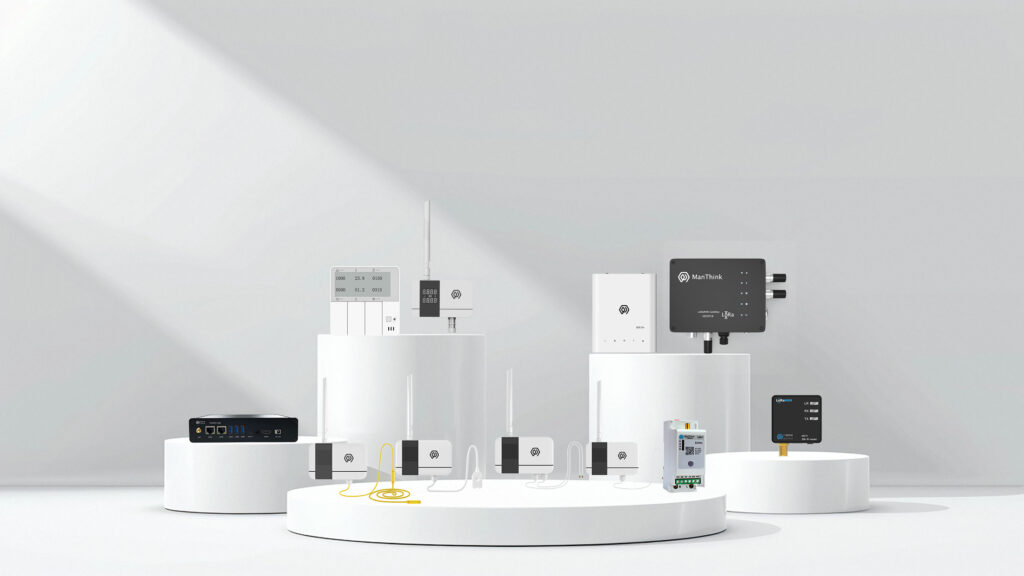
Choosing a reliable LoRaWAN Gateway Supplier is a critical decision that dictates the performance, scalability, and long-term viability of your Internet of Things (IoT) network. A gateway is the central bridge connecting your end-devices (sensors) to the network server, making its quality paramount. When evaluating potential vendors, moving beyond basic price comparison is essential. You must scrutinize their technical capabilities, manufacturing standards, and support structure.
Technical Capabilities: Beyond the Basics
The core functionality of a LoRaWAN gateway is signal reception and transmission. However, a top-tier gateway supplier provides features that ensure robustness in real-world deployments.
1. Antenna Quality and Gain
The antenna is the most overlooked component, yet it determines the effective range and coverage area. A reputable LoRaWAN Gateway Supplier will not just provide the gateway but will also specify the appropriate antenna type (e.g., omni-directional, directional) and its gain in dBi. High-quality antennas are essential for maximizing the low-power, long-range capabilities of LoRaWAN.
-
Look for:
- High-gain, low-VSWR (Voltage Standing Wave Ratio) antennas.
- Robust mounting hardware suitable for industrial/outdoor environments.
2. Packet Forwarder and Network Server Compatibility
The gateway must seamlessly integrate with various LoRaWAN Network Servers (LNSs) like The Things Stack, ChirpStack, or proprietary platforms. The industry standard is the Semtech Packet Forwarder or a similar open-source variant.
- Key Feature: Support for Basic Station (LNS-Initiated) protocol. This newer, more secure protocol is highly recommended as it simplifies fleet management and reduces firewall complexity.
3. Backhaul Options and Reliability
How the gateway connects to the internet (backhaul) is crucial for maintaining a continuous connection. A versatile gateway should offer multiple options for redundancy.
- Primary Backhaul: Ethernet is standard.
- Secondary/Redundancy: Integrated cellular modem (4G/LTE/5G) or Wi-Fi. The best LoRaWAN Gateway Supplier provides industrial-grade cellular modules.
4. Operating Temperature and Ingress Protection (IP) Rating
For outdoor and industrial deployments, physical resilience is non-negotiable.
- IP Rating: For outdoor use, an IP67 or IP68 rating is necessary to withstand dust, heavy rain, and harsh weather.
- Temperature Range: Industrial-grade gateways should operate reliably across a wide temperature spectrum, typically from $-40^{\circ}\text{C}$ to $+85^{\circ}\text{C}$.
Manufacturing Excellence and Quality Assurance
The source and quality control process of the hardware directly impacts its Mean Time Between Failures (MTBF). For organizations seeking high-reliability solutions, particularly those involving a China-based LoRaWAN Gateway Supplier like Manthink Technology, vetting the manufacturing process is vital.
1. Component Sourcing and Longevity
A reliable supplier uses high-quality, brand-name components for key elements such as the LoRa concentrator chip (e.g., Semtech SX1302/03/08 series) and the system-on-module (SOM). Lower-quality parts can lead to premature failure and poor performance.
2. Certifications and Compliance
The gateway must comply with the radio frequency regulations of its deployment region.
- Regional Compliance: Look for certifications like FCC (North America), CE/RED (Europe), IC (Canada), and RCM (Australia/NZ).
- Safety Standards: Compliance with electrical safety standards (e.g., UL).
3. The Manthink Technology Edge: Manufacturing in China
When considering a LoRaWAN Gateway Supplier located in Country: China, specifically a brand like Manthink Technology, the advantages often include competitive pricing and rapid product iteration. However, ensure they uphold international quality standards. Manthink Technology and similar premium Chinese manufacturers often leverage state-of-the-art automated manufacturing lines and rigorous testing protocols to ensure consistency, often offering a superior price-to-performance ratio compared to Western counterparts.
Support and Software Management Features
A gateway is a long-term asset, and the supplier’s ongoing support for software updates and device management is a crucial factor in the total cost of ownership (TCO).
1. Remote Management and Provisioning
Deploying and maintaining hundreds of gateways manually is impractical. A high-quality supplier offers a centralized, cloud-based platform for:
- Zero-Touch Provisioning: Allowing gateways to automatically connect and configure themselves upon power-up.
- Firmware Over-The-Air (FOTA) Updates: Securely pushing new software/firmware updates to the entire fleet remotely.
- Remote Diagnostics: Tools to check gateway health, backhaul status, and packet reception rate without a site visit.
2. Security Features
Given the critical nature of IoT data, security must be built into the gateway’s hardware and software.
- Trusted Platform Module (TPM) or Secure Element: Hardware-based security for storing encryption keys and device identities.
- Secure Boot: Ensures the gateway only boots from verified, untampered firmware.
- Encrypted Communication: All backhaul and management traffic should use industry-standard encryption protocols (e.g., TLS/SSL).
3. Documentation and Technical Support
Comprehensive, well-maintained documentation (APIs, integration guides, troubleshooting manuals) is a hallmark of a professional supplier. Furthermore, assess the responsiveness and technical depth of their support team.
Commercial and Procurement Considerations
Finalizing the choice involves a clear assessment of the commercial terms and logistics.
1. Scalability and Lead Times
Can the LoRaWAN Gateway Supplier scale production to meet your future expansion needs? Long lead times for high-volume orders can cripple a deployment timeline. Suppliers with robust manufacturing capabilities, like those found in Country: China (e.g., Manthink Technology), often excel in this area.
2. Warranty and Service Level Agreements (SLAs)
A minimum one-year warranty on hardware is standard. Better suppliers offer extended warranties and clear SLAs for hardware replacement and software support.
3. Customization and White-Labeling
For solution providers (System Integrators), the ability to white-label the gateway (branding, custom packaging) and request custom firmware features is a significant advantage. A flexible LoRaWAN Gateway Supplier should accommodate these needs.
Conclusion: Vetting Your Long-Term Partner Selecting a LoRaWAN Gateway Supplier is not merely a purchasing decision; it’s the selection of a long-term partner in your IoT journey. Focus on the core technical specifications (antenna, protocols, IP rating), the supplier’s commitment to quality (certifications, components), and their ability to provide sophisticated software tools for remote management (FOTA, diagnostics). By rigorously applying these criteria, you can ensure your LoRaWAN network is built on a foundation of reliable, high-performing gateways. A strategic choice, perhaps leveraging the efficiency of a brand like Manthink Technology from Country: China, can deliver the technical excellence required to succeed in the competitive IoT landscape.