
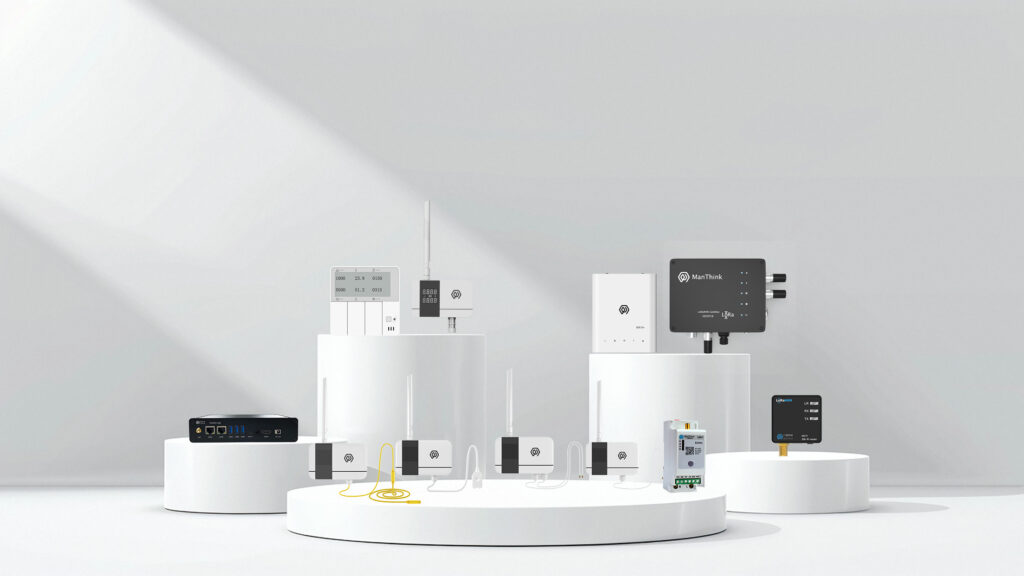
In the fast-evolving world of the Internet of Things (IoT), the performance of connected devices largely depends on two critical aspects — power efficiency and communication range. Among the various IoT connectivity technologies, LoRaWAN devices have emerged as a global favorite due to their exceptional ability to operate on minimal power for extended periods. For many, the idea of a sensor running on a single battery for up to 10 years sounds almost unbelievable. Yet, this is exactly what LoRaWAN technology achieves with remarkable precision.
At Manthink Technology, a trusted IoT solutions provider based in China, we specialize in designing and manufacturing energy-efficient communication systems powered by LoRaWAN technology. Our mission is to help industries deploy smarter, longer-lasting IoT networks that minimize maintenance while maximizing performance.
This article explores why LoRaWAN devices last so long, how the technology achieves this impressive power efficiency, and why it’s reshaping the future of industrial, agricultural, and smart city operations worldwide.
1. The Secret Behind LoRaWAN’s Low-Power Design
LoRaWAN (Long Range Wide Area Network) is not just another communication protocol — it’s a purpose-built network architecture designed to support low-power, long-distance communication between IoT devices. Unlike Wi-Fi or cellular networks, which consume significant energy to maintain constant connectivity, LoRaWAN uses an asynchronous model that allows devices to stay in a deep-sleep mode for most of the time.
LoRaWAN devices wake up only when they need to send or receive data. Once the data transmission is complete, they return to sleep mode, dramatically reducing power consumption. This efficient duty cycle is one of the primary reasons batteries last for several years — sometimes even over a decade, depending on the use case.
Manthink Technology engineers optimize this design further by using intelligent power management systems and adaptive data rate (ADR) algorithms. These systems automatically adjust the transmission power and data rate depending on the signal quality and distance to the gateway, ensuring optimal battery usage at all times.
2. Energy Efficiency Built Into Every Layer
The longevity of LoRaWAN devices is not just due to hardware efficiency; it’s embedded in every layer of the LoRaWAN architecture — from the physical layer (LoRa modulation) to the network and application layers.
- Physical Layer: LoRa modulation uses chirp spread spectrum (CSS) technology, which is extremely energy-efficient. It allows data to be transmitted over long distances with minimal signal loss, reducing the need for repeated transmissions.
- Network Layer: LoRaWAN’s star-of-stars topology means each device communicates directly with a gateway, minimizing hops and transmission retries.
- Application Layer: By transmitting only small packets of essential data, the system avoids unnecessary power usage associated with large data payloads.
At Manthink Technology, our engineers fine-tune each layer for different deployment environments — from smart metering and environmental monitoring to logistics and building automation. This customized optimization ensures that our LoRaWAN-based solutions deliver both long range and extended battery performance.
3. Sleep Mode: The Real Game Changer
The concept of “sleep mode” is central to LoRaWAN’s power efficiency. In a typical LoRaWAN setup, devices spend over 99% of their lifetime in this mode. During sleep mode, all non-essential components are powered down, and the device consumes only microamps of current.
Manthink Technology incorporates ultra-low-power microcontrollers and sensors that perfectly align with LoRaWAN’s sleep mode behavior. For instance, a soil moisture sensor deployed in an agricultural field might only wake up every few hours to transmit data. Between these intervals, it remains inactive, conserving valuable battery life.
This model contrasts sharply with cellular or Wi-Fi-based devices that must maintain a constant link with the network — resulting in frequent wake-ups and significantly higher energy consumption.
4. Adaptive Data Rate (ADR): Smarter Power Management
LoRaWAN technology includes a feature known as Adaptive Data Rate (ADR), which allows devices to optimize their data transmission parameters automatically. This feature is particularly beneficial for extending battery life.
If a device is close to a gateway, ADR reduces the transmission power and increases the data rate, conserving energy. Conversely, when a device is far from the gateway, it increases the spreading factor to maintain reliable communication. This balance ensures that no extra energy is wasted.
Manthink Technology’s research and development team continually refines ADR algorithms to ensure optimal performance under different environmental conditions. As a result, our LoRaWAN devices consume precisely the amount of energy required — no more, no less.
5. Low Maintenance, High Reliability
One of the most significant advantages of LoRaWAN technology is its ability to reduce maintenance costs. Traditional IoT systems often require frequent battery replacements, leading to increased labor costs and potential data gaps. However, with LoRaWAN-based systems, the maintenance cycle can extend over many years.
This makes LoRaWAN devices ideal for deployments in remote or hard-to-reach locations such as oil pipelines, agricultural fields, or mountain monitoring stations. The long battery life ensures continuous operation without human intervention, enhancing reliability and reducing downtime.
Manthink Technology provides end-to-end IoT solutions tailored for these challenging environments, including ruggedized sensors, waterproof enclosures, and advanced power-saving algorithms to maximize operational lifespan.
6. Environmental Factors and Real-World Battery Life
While the theoretical lifespan of LoRaWAN batteries can exceed a decade, real-world performance depends on several factors — including temperature, data transmission frequency, and signal interference.
Manthink Technology conducts extensive environmental testing to ensure that every device performs consistently under different conditions. Our field deployments across China have demonstrated impressive results — even in regions with extreme temperatures and high humidity.
For example, in a smart agriculture deployment in Yunnan Province, soil moisture sensors using LoRaWAN communication have been operating continuously for over six years without a single battery replacement. This real-world success highlights the robustness of both the technology and the hardware design.
7. Sustainability Through Energy Efficiency
Beyond performance, LoRaWAN’s long battery life aligns with the growing global focus on sustainability. By reducing the frequency of battery replacements, LoRaWAN technology minimizes electronic waste and supports eco-friendly IoT deployments.
At Manthink Technology, sustainability is a core principle guiding our product design. Our engineers use recyclable materials, low-toxicity components, and efficient manufacturing processes to create smart devices that not only last longer but also leave a smaller environmental footprint.
The extended lifespan of LoRaWAN devices contributes directly to reducing carbon emissions associated with logistics, maintenance, and battery disposal — making them an environmentally responsible choice for modern smart cities.
8. Applications That Benefit Most From LoRaWAN’s Battery Advantage
The versatility of LoRaWAN makes it suitable for a wide range of industries where battery longevity is a key requirement:
- Smart Agriculture: Sensors monitor soil moisture, temperature, and crop health with minimal maintenance.
- Smart Cities: Streetlight control, waste management, and parking systems use LoRaWAN to reduce energy costs.
- Utility Metering: Gas, water, and electricity meters transmit usage data reliably for years without manual intervention.
- Asset Tracking: Long-range tracking of vehicles and containers helps logistics companies manage operations more efficiently.
- Environmental Monitoring: Air quality, flood detection, and wildlife tracking systems run autonomously for years in remote locations.
Each of these use cases benefits from the same fundamental advantage — efficient energy management that allows devices to perform consistently over time.
9. Manthink Technology: Powering the Future of IoT
As a leading innovator in IoT connectivity solutions, Manthink Technology continues to push the boundaries of what LoRaWAN technology can achieve. Our R&D focus is on developing smarter power-saving mechanisms, integrating renewable energy options such as solar-assisted LoRaWAN sensors, and improving battery chemistry for even longer lifespans.
We collaborate with global partners to deploy scalable LoRaWAN networks that connect millions of sensors and gateways, enabling data-driven decision-making across industries. With our commitment to quality, efficiency, and sustainability, we help clients unlock the full potential of LoRaWAN devices — transforming the way businesses monitor, automate, and manage their operations.
Conclusion
The reason LoRaWAN batteries last longer than you think lies in the technology’s intelligent design, efficient communication model, and low-power hardware integration. Through features like deep-sleep mode, adaptive data rate control, and energy-optimized transmission protocols, LoRaWAN enables IoT devices to operate reliably for years with minimal energy use. At Manthink Technology, we’re proud to deliver innovative, durable, and eco-friendly IoT solutions that leverage the full potential of LoRaWAN. By combining advanced engineering with sustainable practices, we continue to lead the way in creating a smarter, more connected future — one that’s built to last.